
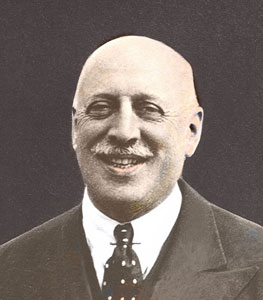
 C.-H. Douglas
1879-1952
Scottish engineer who conceived the Social Credit proposals
This booklet outlines briefly the economic analysis and constructive proposals known as Social Credit. These are basically the work of Major C. H. Douglas, a Scottish engineer of broad practical experience in science, business, and economics.
The proposals of Social Credit are designed to revive business, to preserve private property and the profit system, to reduce debt, to lower taxes, and to provide economic security for every American citizen.
These aims would be accomplished by the issuance of purchasing power direct to consumers in the form of credit. Three definite practical steps arc required:
- The establishment in the United States Treasury of a National Credit Account in which the nation is credited with the production of real wealth and debited with its consumption.
- The sale of all consumers’ goods at the Just Price, by means of a Retail Discount determined by the true cost of production.
- The issuance of monthly Dividends to every American citizen.
Social Credit very properly comes under the heading of “THE NEW ECONOMICS,” which approaches our present-day business problems from the practical viewpoint of a civilization equipped with every modern device of science for satisfying the needs and desires of its members. In answer to the problems of Poverty and Depression Social Credit proposes a definite solution, the most sensible and least difficult way out of our financial confusion. Social Credit points the way from depression to permanent economic security, achieved through the true financial valuation of America’s Real Wealth and the provision of adequate buying power to American citizens.
Social Credit is founded on two propositions:
First, that money must accurately reflect the true facts of our Real Wealth. Second, that in any civilized nation where the money-system reflects the facts and performs its function of distributing goods and services for consumption, in that nation prosperity and permanent economic security will be achieved, and poverty, paralyzing debt, and depression banished.
Yet Social Credit is neither Socialism, Fascism, nor Communism, for it involves no confiscation and would sacrifice neither the liberty nor property rights of anyone. More than anything else it means every day common sense applied to money and business.
Should the principles of Social Credit be put into operation today by the President and Congress of the United States, within six months the economic security of every American citizen would be won, and the nation could enjoy the prosperity of plenty warranted by its rich resources.
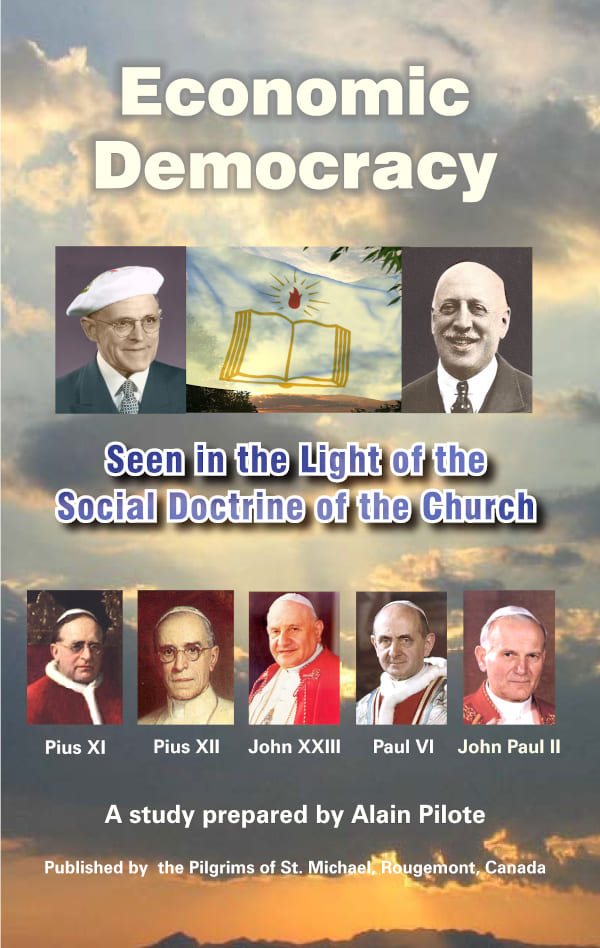
And viewed in the light of the social doctrine of the Church
 |
 |
|
 Pius XI |
 Pius XII |
 John XXIII |
 Paul VI |
 John Paul II |
A study prepared by Alain Pilote on the occasion of the week of study that followed the Congress of the Pilgrims of Saint Michael in Rougemont, September 5-11, 2006
Download the book in PDF format (2 MB)
Our regular readers know that every issue of this journal contains articles about the Social Credit financial proposals, which are more timely than ever to solve today’s economic problems. This Social Credit idea may raise many questions among our new readers, and one article is certainly not enough to answer all these questions, or to give a clear understanding of the whole concept of Social Credit. Besides, most people simply do not have the time to read long books on the subject.
So, here is the solution: the Social Credit proposals explained in 10 lessons, each one being the logical continuation of the previous one. The first lesson begins with principles, and from there, we lay the foundations to have a full knowledge of all that Social Credit implies.
These lessons were published in the “Michael” Journal from the September-October, 2006 issue to the November-December, 2007 issue. There are of course available on this website, but we have also made a 150-page booklet that contains the 10 lessons, that you can order from our office at $11 each (postage included) if you live in Canada, $12 for the U.S.A., and $14 for overseas. Good reading !
Introduction
Social Credit is a doctrine, a series of principles expressed for the first time by Major and engineer C. H. Douglas in 1918. The implementation of these principles would make the social and economic organism effectively reach its proper end, which is the service of human needs. Social Credit would neither create the goods nor the needs, but it would eliminate any artificial obstacle between the two of them, between production and consumption, between the wheat in elevators and the bread on the table. The obstacle today — at least in the developed countries — is purely of financial order, a money obstacle. Now, the financial system neither proceeds from God nor nature. Established by men, it can be adjusted to serve men and no more to cause them problems.
To this end, Social Credit presents concrete propositions. Though very simple, these propositions nevertheless imply a real revolution. Social Credit brings the vision of a new civilization, if by civilization one can mean man’s relationship with his fellow men and the conditions of life making easier for each one the blossoming of his personality.
Under a Social Credit system, we would no longer be struggling with problems that are strictly financial, which constantly plague public administrations, institutions, families, and which poison relationships between individuals. Finance would be nothing but an accounting system, expressing in figures the relative values of goods and services, making easier the mobilization and coordination of the energies required for the different levels of production towards the finished good, and distributing to ALL consumers the means to choose freely and individually what is suitable to them among the goods offered or immediately realizable.
For the first time in history, absolute economic security, without restrictive conditions, would be guaranteed to each and everyone. Material poverty would be a thing of the past. Material anxiety about tomorrow would disappear. Bread would be ensured to all, as long as there is enough wheat to make enough bread for all. Similarly for the other goods that are necessary for life.
Each citizen would be presented with this economic security as a birthright, as a member of the community, enjoying throughout one’s life an immense community capital, that has become a dominant factor of modern production. This capital is made up of, among other things, the natural resources, which are a collective good; life in society, with the increment that ensues from it; the sum of the discoveries, inventions, technological progress, which are an ever-increasing heritage from generations.
This community capital, which is so productive, would bring each of its co-owners, each citizen, a periodical dividend, from the cradle to the grave. And seeing the volume of production attributable to the common capital, the dividend to each one ought to be at least sufficient to cover the basic necessities of life. This dividend would be given in addition to those who personally take part in production, without prejudice to wages, salaries, or other forms of reward.
An income thus attached to the individual, and no longer only attached to his status of employee, would shield him from exploitation by other human beings. With the basic necessities of life guaranteed, a man can better resist being pushed about, and can better take up the career of his own choosing. Freed from urgent material worries, men could apply themselves to free activities, which are more creative than commanded work, and strive towards their own development by the exercise of human functions superior to the purely economic function. Getting the daily bread would no more be the absorbing occupation of their lives.
Note: The text of the following 10 lessons is essentially taken from Louis Even’s writings: In This Age of Plenty (a 410-page book), What Do We Mean by Real Social Credit? (a 32-page brochure); and A Sound and Effective Financial System (a 32-page brochure).
Here is the list of the ten lessons:

Preface to the 1946 French Edition
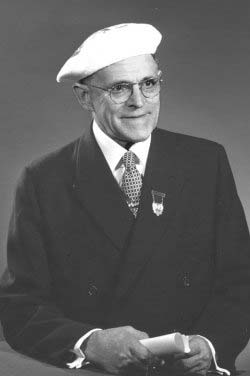 Louis Even
This book deals with Social Credit, but in no way does it sum up the matter. In fact, Social Credit is a whole new orientation given to civilization: It deals with social and political matters as well as, or more so, with matters of economics. We even believe, as Douglas did — to whom the world owes this enlightening doctrine — that rectifying economics along Social Credit principles, is impossible without first rectifying politics.
In this book, however, except for a few thoughts arising from the repercussions of a flawed and dominating financial system on politics, we have confined our study to the economic objectives and monetary proposals of Social Credit.
The title of the book — In This Age of Plenty — clearly shows that we are dealing with an economy of plenty, of an easier access to the immense possibilities of modern production.
“Old economics” could well have been found under the title of "The Age of Gold" or any other rare commodity, at a time when production itself often failed. But progress is ignored and logic is set aside when, to confer claims upon an automated production, we insist on keeping an instrument linked to scarcity.
In the first part of this book, we recall essential and very simple notions that are readily admitted by everyone, but which are almost totally ignored by the present economic organism. The ends no longer direct the means. A brief study of the present monetary system shows that money governs where it ought to serve. We offer the Social Credit proposals as a remedy, giving an outline without going into the methods of implementation. The problem, we believe, lies not so much in developing an operational technique, but in getting people to agree on proposals that seem both too simple and too bold to the minds of those who are used to losing sight of the ends and to getting bogged down in the complexity of the means. Therefore, several chapters are meant to be a plea in favor of the Social Credit doctrine.
The second part is made up of reprints of speeches and articles that are likely to shed light on different aspects of Social Credit.
In offering this book to the public, we have set our sight on the average reader. Even when dealing with precise topics, we have done our best to avoid technical terms, since they are more likely to make the readers weary than to enlighten them. We have striven to write in such a way as to be readily understood by the largest number of people. This is in line with an economy of plenty at the service of all and everyone.
Montreal, May 1st, 1946.
LOUIS EVEN
Preface to the 1996 edition
Fifty years after its publication, Louis Even’s book "Sous le Signe de l'Abondance" is now available in English. Today, throughout the world, there are as many subscribers to his Movement’s English-language periodical, Michael, as there are to its French counterpart, Vers Demain. Details on the development of Louis Even’s Social Credit Movement can be found in the biographical notes.
"In this Age of Plenty" is the English translation of the fourth revised and enlarged French edition published in 1988. Ten chapters and six appendices, mostly articles that were published in the Michael Journal since, have been added to the 1988 edition.
In This Age of Plenty published in Polish
 Bishop Kraszewski
Louis Even’s book, “In This Age of Plenty”, was published in Polish in 1993 by Bishop Zigniew Jozef Kraszewski, then Vicar General of the Diocese of Warsaw-Prague, Poland. (Note: Bishop Kraszewski died on April 4, 2004.) Here is the translation of the preface to Louis Even’s book, written by Bishop Kraszewski:
“What Catholics learned in the social doctrine of the Church is the way between socialism and capitalism. For many years, this doctrine has been diffused in Canada, and known as the Social Credit theory. Louis Even’s book, In This Age of Plenty, that I introduce to the Polish readers, is an exposition of the Catholic social doctrine that is good not only for the Canadians; this book contains a lot of instructive topics for any person who reads it and who is open to social problems. This book has not been written only for great theoreticians and scholars, but for everybody. That is why this book is precious to the Poles, especially at the time of the second miracle of the Vistula River that we are presently experiencing. (The miracle of the downfall of Communism.)
“Poland miraculously succeeded in gaining its freedom and sovereignty. After the devastation of Communism that had been keeping us captive for so many years, we have the duty to choose the right path of social justice, based on Catholic doctrine. I think this book will largely help in achieving that. I entrust all the readers to the protection of Our Lady Victorious, who reigns in the co-cathedral of Kamionku, in Warsaw.”
Preface to the 2017 Edition
Things have not improved much in Economics since Louis Even’s book, In this Age of Plenty, was written in 1946. It could even be argued that they have gotten worst for a lot of people while credit is being concentrated in the hands of fewer individuals.
Production is easier to make than it ever was. Yet, distrbution is lagging behind not because the means of distribution are lacking, but because the financial means do not reflect facts.
At a time when our most brilliant minds have come to realize that “workers are being left behind because of automation, globalization and progress” (Warren Buffett) while others are suggesting that we should “tax the work of robots” (Bill Gates) to help those who have lost their jobs to automation, it is high time that Louis Even be allowed to lead us a step further in our study of Social Credit Economics.
We have kept the first part of the book unchanged. It is a philosophical approach to Economics that clearly defines means and ends and how they must be applied to Economics.
The second part has been replaced by A Sound and Efficient Financial System. This is a 32 page document that was written in 1964 to explain how Social Credit might be applied.
A third part has been added. It contains some of the articles that were printed in part II of the previous English edition